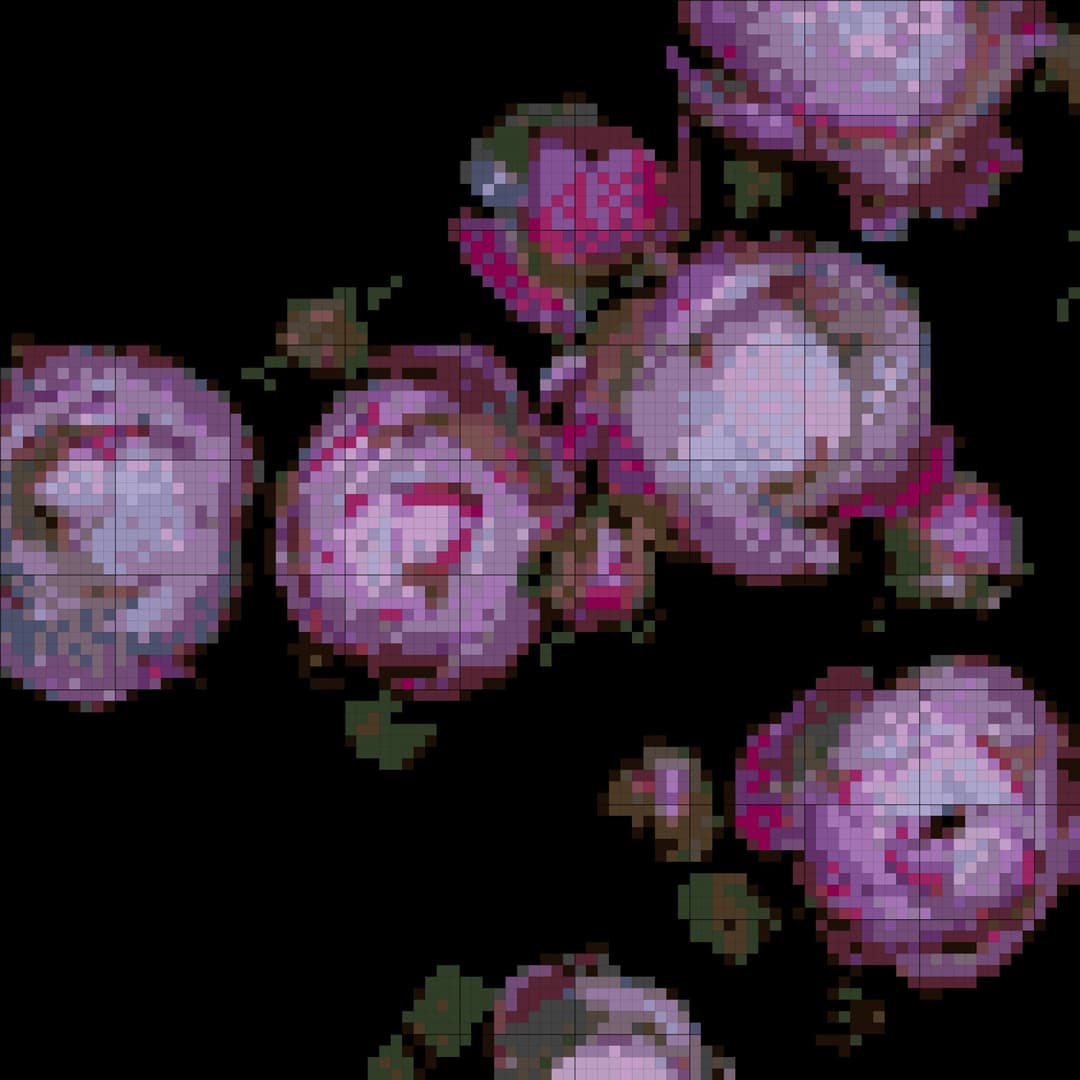
Free Lavender Cross-Stitch Pattern with DMC Codes

Stitch a calm lavender bouquet with this free printable cross-stitch pattern. The chart includes DMC floss colors, fabric sizing, and an editable preview so you can adjust the design before exporting a PDF.

Stitching lavender's most important detail

Real lavender florets grow in whorls around a square stem — not a round one. In cross-stitch, resist the urge to outline the stem with a single backstitch line. Instead, use two parallel rows of the stem colour separated by one empty column to hint at that four-sided structure. It takes roughly 20 extra stitches per stem and makes the botanical difference immediately visible.
Chart generated by StitchBitz, licensed under the StitchBitz Generated Chart License.

Source photo by Benjamin Balázs, licensed under CC0 1.0.

Customise the pattern

Turn any photo or picture into a cross stitch pattern.

StitchBitz is a free cross stitch pattern generator that converts your photo or image into an editable DMC chart. Your picture stays on your device—no sign-up required, with free PDF and JPG downloads.

Upload a photo or image to make a cross stitch pattern

100% free · PNG, JPG, HEIC

or drag a file anywhere

How it works

How to make a cross stitch pattern from a photo using StitchBitz

01

Upload

Convert a photo into a cross stitch pattern directly in the browser-based app. Your photos stay on your device.

02

Isolate

Use the AI background toggle to cut out messy backgrounds before the cross stitch chart is generated.

03

Tune

Adjust the DMC color palette, fabric size, and smart stitchability sliders to reduce confetti and keep the photo readable.

04

Export

Instantly download a high-res, print-ready PDF blueprint with the symbol chart, floss list, and project details.

Real examples

See a photo become a cross stitch pattern

StitchBitz turns the colours and shapes in a picture into a counted grid using real DMC floss shades. Open any example to inspect the chart, materials, and editable pattern.

Built for real projects

From picture to a chart you can actually stitch

A useful photo-to-cross-stitch pattern maker needs to do more than pixelate an image. It should simplify the picture, map it to real thread colours, and leave you in control of the final chart.

01

Real DMC floss colours

Every generated colour is matched to a DMC thread code, so the chart maps to floss you can actually buy and stitch with.

02

Cleaner, more stitchable charts

Stitchability controls smooth noisy areas and reduce isolated confetti stitches while keeping the subject recognisable.

03

Private browser processing

Your photo is processed on your device. It is not sent to StitchBitz or stored on a server.

04

Edit before you download

Adjust colours, remove stitches, add backstitch detail, and check the floss list before exporting a PDF or JPG.

Better source, better chart

What pictures work best for cross stitch?

You can turn any image into a cross stitch pattern, but a few simple choices make the finished chart cleaner and easier to recognise.

Choose one clear subject

Pets, portraits, flowers, ornaments, and simple objects usually translate more cleanly than a crowded scene.

Look for contrast

A well-lit subject that stands apart from its background is easier to simplify into distinct thread colours.

Crop before adding detail

Frame the part you care about first. A tighter crop gives the available stitches to the subject instead of empty space.

Good to know

Photo pattern maker questions

The short version: it is free, private, editable, and designed to produce the files you need to start stitching.

Is the cross stitch pattern generator really free?

Yes. You can convert a photo, edit the generated chart, and download the finished pattern as a PDF or JPG without paying or creating an account.

Does StitchBitz upload or store my photo?

No. Pattern generation and image processing run in your browser, so your photo stays on your device.

Which picture formats can I turn into a cross stitch pattern?

StitchBitz accepts JPG, PNG, HEIC, and WebP images. Clear, well-lit pictures with a distinct subject tend to produce the easiest patterns to stitch.

What is included in the downloaded pattern?

The printable PDF includes a symbol chart, DMC floss list, and project details. You can also download a high-resolution JPG chart.

Have your own photo?

Make it into a cross-stitch pattern

Upload a photo or picture, match it to real DMC floss colours, edit the chart, and download a printable pattern for free.

Learn how to choose a photo and pattern settings
Turn your photo into a free cross stitch pattern

What You'll Need

To stitch this design, you will need a piece of Aida fabric measuring at least 15×15 cm on 16-count Aida. The full DMC floss palette for this chart uses 24 colors:

  • DMC 168
  • DMC 415
  • DMC 318
  • DMC 762
  • DMC 3072
  • DMC Blanc
  • DMC 414
  • DMC 3740
  • DMC 939
  • DMC 158
  • DMC 648
  • DMC 3799
  • DMC 451
  • DMC 535
  • DMC 169
  • DMC 3860
  • DMC 317
  • DMC 3371
  • DMC 3021
  • DMC 310
  • DMC 3787
  • DMC 413
  • DMC 844
  • DMC 3031

Frequently Asked Questions

Is a lavender bouquet a good cross-stitch pattern for beginners?

Yes. The purple flower spikes and green stems form large, contiguous color blocks rather than fussy detail, so there is little confetti to fight. 14-count Aida keeps the stitch count manageable for a relaxed first or second floral project.

Which DMC floss colors are used for the lavender?

The bouquet leans on dusty purples and mauves for the flower heads, sage and olive greens for the stems, and soft greys for the plate. The exact DMC codes and how many skeins of each you'll need are listed in the live pattern key below.

What can I make with a finished lavender cross-stitch piece?

Lavender is a popular motif for scented sachets, drawer fresheners, small framed art, and gift tags. Stitched on a 15×15 cm piece of Aida it frames beautifully in a small hoop; worked on higher-count fabric it fits an ornament or pillow front.

94 × 94
Grid Size
15×15 cm on 16-count Aida
Fabric Size
advanced
Difficulty

Why lavender runs hot on screen but cool in hand

Monitor colour profiles push lavender toward a vibrant blue-violet that no DMC thread can match. DMC 210 and 211 — common anchors for lavender palettes — are softer and grayer in natural light than on any screen. Stitch a test square before committing to the full piece, and consider working near a north-facing window where the light is consistent and closest to what the dye was balanced against.

Choose how StitchBitz uses optional cookies

Necessary storage keeps the site working. Analytics helps us understand pattern generation and downloads. Marketing is kept off unless you opt in for future ads and affiliate tools.